Because the gap opens early. In South Africa’s 2021 PIRLS results, 81% of Grade 4 learners could not read for meaning, and maths results fell hardest in poorer, no-fee schools. Our education programme answers that with qualified tutors in maths, science and English after school, plus the uniforms, stationery and mentorship that keep a child in class.
At a glance — as of October 2026
- Programme
- Education & Youth Empowerment, one of UDRS’s four programmes
- Tutoring
- Maths, science and English after school, taught by people trained to teach
- Volunteers
- Weekly homework support and mentorship — consistency over expertise
- Also provides
- Uniforms and shoes, stationery and books, sanitary products, motivational workshops
- Where
- Kya Sand is our primary focus area; education programmes also run in Alexandra
- Cost to equip one child
- R500: a uniform, stationery and books for the school year
Why does after-school tutoring matter in a settlement like Kya Sand?
Because by the time a child is in Grade 4, most are already behind. The 2021 Progress in International Reading Literacy Study, released by the Department of Basic Education in May 2023, found that 81% of South African Grade 4 learners could not read for meaning in any of the country’s official languages, up from 78% in 2016.
Maths tells a similar story. In TIMSS 2023, South Africa’s Grade 5 maths score fell 12 points, from 374 in 2019 to 362, and the Human Sciences Research Council noted that the biggest drops came in the poorer, no-fee schools. Grade 9 improved slightly, from 389 to 397.
| Study | Grade | What it found |
|---|---|---|
| PIRLS 2021 (released May 2023) | Grade 4 | 81% could not read for meaning, up from 78% in 2016 |
| TIMSS 2023 (released December 2024) | Grade 5 maths | Score fell from 374 (2019) to 362; largest drops in poorer, no-fee schools |
| TIMSS 2023 | Grade 9 maths | Score rose from 389 (2019) to 397 |
None of this is a Kya Sand statistic — these are national findings, and we don’t publish learner-level results of our own. But they describe the system a child in an informal settlement is learning in, and the hours after school are where extra help fits without taking a child out of class.
What does the UDRS education programme actually include?
Two halves: the teaching, and the means to be in class. The tutoring covers maths, science and English after school. Alongside it, our services page lists school uniforms and shoes, stationery and books, sanitary products and mentorship programmes, plus motivational workshops for young people.
The reasoning is in the programme’s own description: these items help children focus on their studies. A tutor can’t help a child who stayed home because her shoes split, or because there were no sanitary products that week.
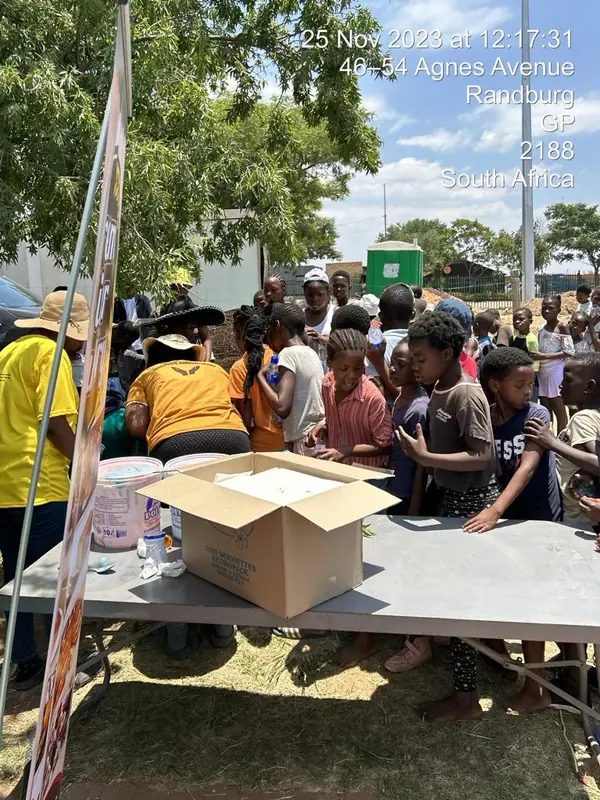
Children at a UDRS table on Agnes Avenue, November 2023
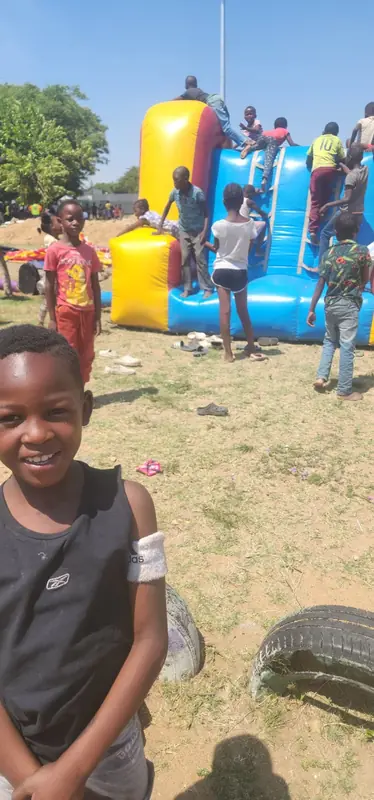
A UDRS community day for the children
Both are our own photographs of children at UDRS days, not a tutoring session. We don’t yet have a photograph of a lesson we’re happy to publish, so we haven’t used a stand-in.
Who does the teaching — volunteers or trained tutors?
Both, in two different roles. The subject tutoring is described on our Section 18A page as taught by people trained to teach, “not homework supervision by whoever is free.” Volunteers fill a separate role: weekly homework support and mentorship for children we’re keeping in school.
For the volunteer role, our volunteer page is blunt: it needs consistency more than expertise. The same face every week matters more than the subject.
| Subject tutoring | Tutoring & mentoring volunteers | |
|---|---|---|
| What | Maths, science and English after school | Homework support and mentorship |
| Who | People trained to teach | Volunteers giving their time |
| What matters most | Teaching the subject properly | Showing up every week |
| Commitment | Part of the funded programme | Weekly, ongoing |
Why pair tutoring with uniforms and stationery?
Because attendance comes before results. Our donate page costs R500 as a school uniform, stationery and books — “one child stays in class for the year.” Tutoring builds on that: it only works for a child who is still at school and still turning up.
It is also why the programme runs in the same places as our relief work. Kya Sand is our primary focus area for relief and education support, so the education work runs in the same community our relief work already serves. See how the four programmes fit together.
How many children does the programme reach?
The programme’s figures are published on our services page and impact page, and that is where they are kept current. We deliberately don’t restate a learner count in a dated article, where it would go stale without anyone noticing.
If you are a company or funder that needs a current, specific figure for a report, ask us directly and we’ll give you the number with what it counts.
How can you help the education programme?
Three ways, depending on what you have to give. Time: join the tutoring and mentoring volunteers, weekly. Money: R500 equips one child for the school year. Company funding: designate a contribution to the education programme specifically and get reporting against it.
UDRS is an approved Public Benefit Organisation, PBO 930091096. For how a company contribution is treated, read how Section 18A giving works; your accountant will apply it against your actual figures.
Key points
- In PIRLS 2021, 81% of SA Grade 4s could not read for meaning; Grade 5 maths fell hardest in poorer schools.
- UDRS tutoring covers maths, science and English after school, taught by people trained to teach.
- Volunteers give weekly homework support and mentorship — consistency over expertise.
- The programme also covers uniforms, stationery, sanitary products and workshops; R500 equips one child for a year.
- Kya Sand is our primary focus area; companies can designate funding to education specifically.
Frequently asked questions
What subjects does UDRS tutor?
Maths, science and English, after school. Our Section 18A page describes the tutoring as taught by people trained to teach, not homework supervision by whoever is free.
Are UDRS tutors volunteers?
The subject tutoring is described as taught by people trained to teach. Volunteers fill a separate tutoring and mentoring role: weekly homework support and mentorship, where consistency matters more than expertise.
Where does the UDRS education programme run?
Kya Sand is our primary focus area, for relief and education support. Our contact page also lists education and youth empowerment programmes in Alexandra.
What else does the education programme provide besides tutoring?
School uniforms and shoes, stationery and books, sanitary products, mentorship programmes and motivational workshops for young people.
How much does it cost to keep a child equipped for school?
Our donate page costs R500 as a school uniform, stationery and books, enough for one child to stay in class for the year.
Can a company fund the education programme specifically?
Yes. Contributions can be designated to a specific programme and reported against that designation. UDRS is an approved Public Benefit Organisation, PBO 930091096.
Give an afternoon a week
The tutoring and mentoring role needs the same face every week more than it needs a teaching degree. If you can commit to that, we’d like to hear from you.
Sources
National figures, opened and checked on 28 October 2026:
- Daily Maverick, 16 May 2023 — PIRLS 2021: 81% of Grade 4 learners unable to read for meaning, 78% in 2016, released by the Department of Basic Education
- Vijay Reddy (HSRC), via The Conversation and Bizcommunity, 11 March 2025 — TIMSS 2023 Grade 5 and Grade 9 maths scores, and the larger drops in poorer, no-fee schools
Programme facts come from our own published pages, re-checked against the live site the same day: What we do, Section 18A, Volunteer, Donate and Contact.