
Between 8 and 17 October 2026, news outlets reported four informal-settlement fires in Ekurhuleni, Cape Town and KwaZulu-Natal, the largest destroying more than 208 shacks at Masinenge. The most useful help is money given through whoever is already coordinating relief for that settlement, and goods only once you know they are needed.
At a glance — as of 18 October 2026
- Fires covered here
- Four, reported 9 to 17 October 2026
- Largest
- Masinenge, KwaZulu-Natal: more than 208 shacks destroyed
- Deadliest
- Marathon, Germiston: four people died, three of them children
- Confirmed causes
- None yet in the reports we read
- Best way to help
- Ask who is coordinating; give money there, goods only on request
What happened in the October 2026 shack fires?
In ten days, four fires were reported in informal settlements in Gauteng, the Western Cape and KwaZulu-Natal. They ranged from three structures to more than two hundred. The table sets out only what each report states.
This is general context, not a UDRS operation. UDRS is not named in any of these reports, and we do not claim a part in those responses. Our own relief work is covered further down.
| Settlement | Reported | What the report says | Source |
|---|---|---|---|
| Marathon, Germiston (Ekurhuleni) | 9 Oct | Four people died, three of them children aged two, five and seven. Twelve shacks destroyed. Cause under investigation. | EWN |
| Imizamo Yethu, Hout Bay (Cape Town) | 11 Oct | Close to 400 people left homeless, according to a photo caption credited to Gift of the Givers. | News24 |
| Singabalapha, Observatory (Cape Town) | 15 Oct | One man died and three structures were destroyed. The settlement has no electricity, running water or toilets. Cause unknown. | GroundUp |
| Masinenge, Ray Nkonyeni (KwaZulu-Natal) | 17 Oct | More than 208 shacks destroyed. Cause unknown. Province supplying building materials, shelter, food and blankets. | IOL |
Why do shack fires spread so far, so fast?
Because dwellings are close together and water is scarce. At Singabalapha, a resident told GroundUp there were only five large bottles of water in the settlement to fight the fire. In Germiston, EWN reported residents formed a bucket brigade to stop it reaching neighbouring shacks.
Weather adds to it. After the Masinenge fire, a spokesperson for the KwaZulu-Natal MEC for Transport and Human Settlements warned of “persisting dry, windy conditions accompanied by heatwaves,” in which fires can spread rapidly.
What is the best way to help families after a shack fire?
Start by finding out who is already coordinating relief for that settlement. It is usually the municipality's disaster management team, the provincial government, or an organisation already working there. Give through them, so your help lands where the gaps actually are.
Money is usually the most useful form. Unrequested goods have to be sorted, stored and moved, and may duplicate what is already arriving. At Masinenge, the province said it would provide emergency shelter, food and blankets, and was delivering building materials.
- Ask before you collect goods. Find out what is missing, not what you assume is missing.
- Give to an organisation you can identify: a published registration number, a physical address and a phone line that is answered.
- Want a Section 18A receipt? Ask for it before you give, and check the PBO number it will carry. Our post on what a Section 18A certificate must show covers the details.
- Think past the first week. Once the blankets and meals have arrived, rebuilding is what is left, and that is where help usually dries up.
After a large fire, appeals to pay money into private accounts often circulate on social media. Some are genuine, but you cannot check most of them. If you cannot verify who is collecting, give to an organisation you can identify instead.
How can shack fires be prevented?
Most of the official guidance is cheap and specific. The points below come from the Western Cape Government's fire-safety tips for informal settlements, republished in April 2026. Check your own municipality's emergency number, because it differs by area.
| Risk | What the guidance says |
|---|---|
| Paraffin stoves | Place on a stable surface. Keep sand nearby: water can spread a paraffin fire, so use sand or an extinguisher. |
| Candles | Use a safe holder away from anything that burns, and cut long candles in half. |
| Braziers and open fires | Never leave a brazier or coal fire burning indoors overnight. Put out all open fires before sleeping or leaving. |
| Spacing and access | Build dwellings at least 3m apart, keep the space around them clear, and keep roads open for emergency vehicles. |
| Doors | Do not padlock doors from the inside. Use a bolt that opens quickly in a fire. |
| Electricity | Avoid illegal or faulty connections; have any connection installed by an accredited electrician. |
What does UDRS do when there is a fire?
Our Community Relief & Emergency Support programme gives families affected by fires food parcels, warm clothing, blankets and essential household items, and helps coordinate temporary shelter. We have also donated fire-safety equipment, including fire extinguishers. See what we do.
We also run named rebuilds. In July 2025 fire destroyed the home of Mrs Dikeletsane Nkgotwe in Doornkop, Soweto. Her family has rebuilt the shell; plumbing, electricity, tiles, a ceiling and paint are still needed. Read the Nkgotwe rebuild appeal.
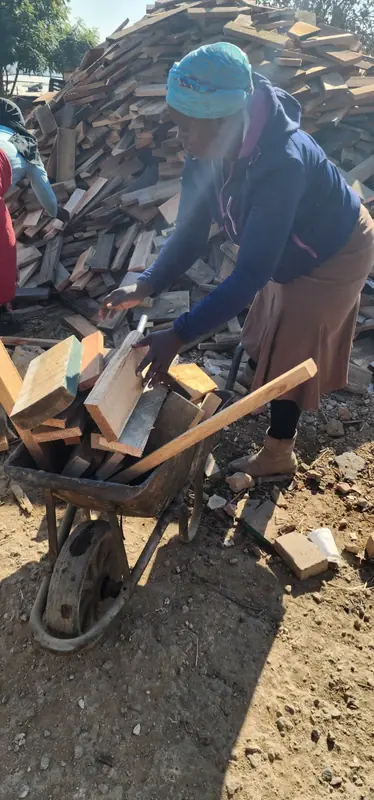
Salvaging timber to rebuild
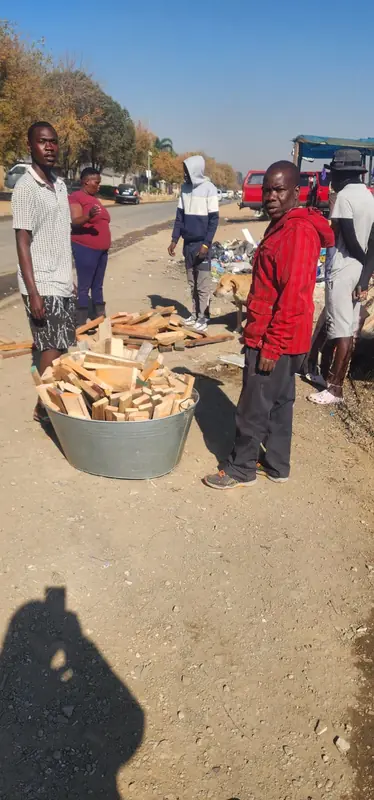
Recovering wood after a fire
We have no part in the four responses described above, and this post does not say we do. Our photographs here are our own, from earlier UDRS fire work, not from these October fires.
What does a donation to UDRS fire relief buy?
Our donation page names it plainly: R150 is a fire blanket, two hot meals and a hygiene pack, and R1 000 is a full emergency relief package for one household after a fire. More on the smaller amount in what R150 actually buys.
Key points
- Four informal-settlement fires were reported between 9 and 17 October 2026; the largest destroyed more than 208 shacks.
- No cause has been confirmed for any of them in the reports we read.
- Help through whoever is coordinating relief; give money, and goods only when asked.
- Official prevention advice is specific and cheap: sand for paraffin fires, short candles, no braziers indoors overnight.
Frequently asked questions
How can I help families after a shack fire in South Africa?
Find out who is already coordinating relief for that settlement, usually the municipality's disaster management team, the provincial government or an organisation already working there, and give through them. Money given to an organisation you can identify is usually easier to use than goods nobody asked for.
Should I donate clothes and blankets, or money?
Ask first. After the Masinenge fire, the KwaZulu-Natal provincial government said it would provide emergency shelter, food and blankets, so unrequested blankets could duplicate what is already arriving. Money lets the coordinator buy what is actually missing.
What caused the October 2026 shack fires?
As of 18 October 2026, the reports we read gave no confirmed cause for any of the four fires in this post, and some are under investigation. We will not guess at one.
Is UDRS helping with these fires?
UDRS is not named in any of the reports cited here, and we do not claim a part in those responses. Our own fire relief work and the Nkgotwe home rebuild are described on our What we do page and the Nkgotwe appeal page.
How do I check that a fire relief appeal is genuine?
Give to an organisation you can identify: a published registration number, a physical address and a phone line that is answered. If you want a Section 18A receipt, ask for it before you give and check the PBO number it will carry.
How can shack fires be prevented?
The Western Cape Government's guidance includes keeping stoves on stable surfaces, cutting long candles in half, building dwellings at least 3m apart, using sand rather than water on a paraffin fire, and never leaving a brazier burning indoors overnight.
Fund fire relief
Give once-off or monthly from R150. A monthly gift means relief is ready before the next fire, not raised after it.
Sources
External reports were opened and read on 18 October 2026. UDRS facts come from our own published pages, re-checked the same day:
- EWN, 9 October 2026 — the Marathon, Germiston fire: deaths, shacks destroyed, investigation, bucket brigade
- News24, 11 October 2026 — the Imizamo Yethu fire and the number left homeless
- GroundUp, 15 October 2026 — the Singabalapha fire, the settlement's lack of water and services
- IOL, 17 October 2026 — the Masinenge fire, the provincial relief response and the weather warning
- Arrive Alive, April 2026 — Western Cape Government fire-safety tips for informal structures
- What we do, Donate and Rebuilding after the fire — UDRS's relief programme, donation amounts and the Nkgotwe appeal